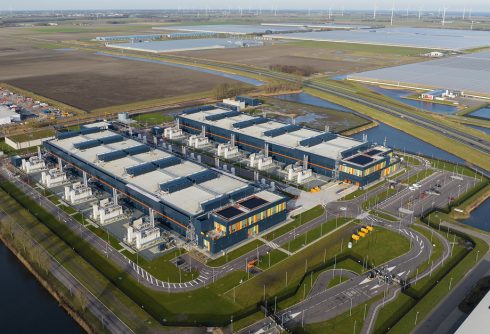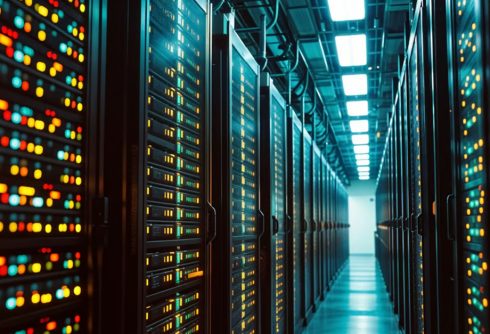
A data center developer can secure land, fiber, permits, and customer demand, then still lose months waiting for power. That risk is growing as AI workloads increase facility loads and utilities work through interconnection queues, transmission upgrades, and equipment shortages. According to Lawrence Berkeley National Laboratory and the U.S. Department of Energy, U.S. data centers used 176 terawatt hours (TWh) of electricity in 2023, about 4.4% of total U.S. electricity consumption, and could reach 580 TWh by 2028.
For AI, cloud, and hyperscale data center campuses, power planning increasingly begins with a portfolio question: how can the project secure enough power soon, keep it reliable, and still support long-term sustainability and cost goals?
In addition to figuring out how much power is needed, operators must explore the multiple reliable paths to power they can build within a reasonable timeframe and budget. In such a demanding environment, transformers, backup power generators, switchgear and distribution infrastructure, logistics, testing, and energization planning are all central to successful data center development.
Going Beyond Grid-Only Planning
The utility grid remains the foundation of most data center power infrastructure. Most large campuses still depend on utility service, dedicated substations, transmission planning, metering, protection systems, and long-term interconnection agreements. However, developers can no longer assume that grid capacity, transmission upgrades, and interconnection timelines will align with AI campus schedules.
Deloitte’s 2025 AI infrastructure survey found that 72% of respondents viewed power and grid capacity as very or extremely challenging for AI infrastructure buildout. Supply chain disruptions and security were also prominent concerns. Industry sources are also reporting that power availability is shaping where, how, and whether data center capacity can be built.
This shift is changing site selection. Developers are evaluating substation capacity, utility planning data, interconnection queues, nearby generation, gas infrastructure, environmental constraints, incentives, and transmission limits before committing to land. A site with good fiber and permitting conditions may still be a poor fit if power cannot be delivered at the right voltage, on the right timeline, and with a realistic upgrade path.
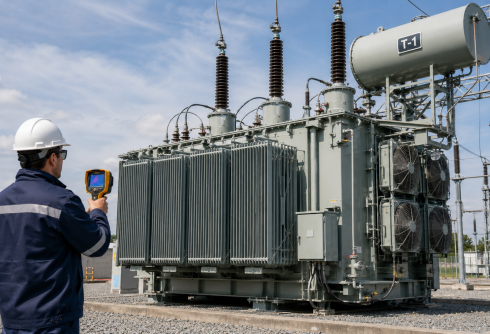
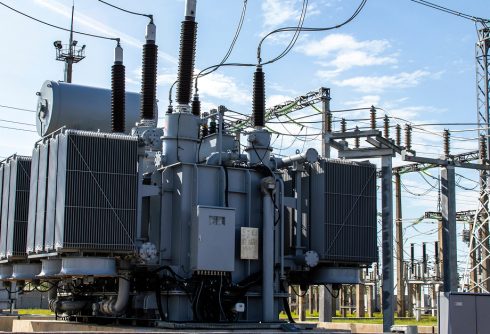
Even when generation or utility capacity is available, the project still needs the electrical infrastructure to move and manage power safely. Large power transformers, substation transformers, step-down transformers, medium-voltage gear, protection coordination, factory testing, shipping, installation, and commissioning can all become schedule drivers. In many projects, the practical bottleneck is not only energy supply. It is the infrastructure required to connect, transform, protect, and operate that supply.
The Emerging Data Center Power Portfolio
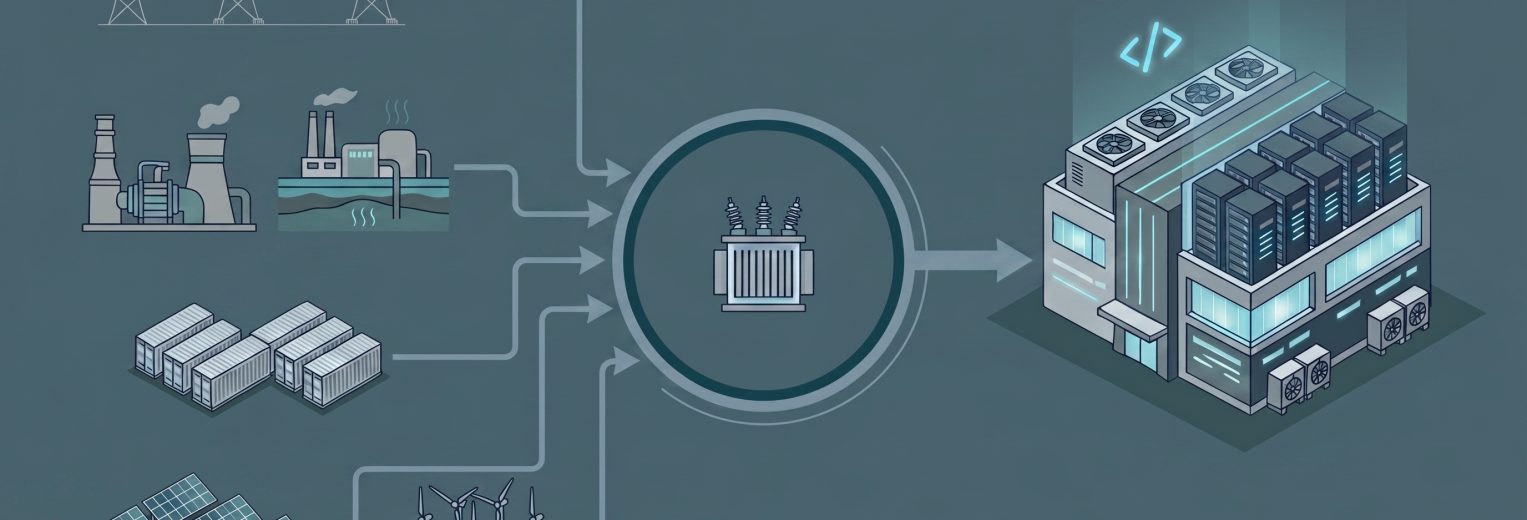
Diversification does not mean replacing the utility. It means building layered data center power solutions that can combine grid service, onsite generation, battery energy storage, contracted clean energy, and future firm power options.
The best strategy depends on the site, utility, load profile, reliability target, sustainability requirements, and schedule. A campus may begin with bridge power, transition to utility service, add battery storage for flexibility, and later contract for clean firm supply. Another site may rely on a dedicated substation and renewable PPAs while reserving space for future onsite generation or microgrid operation.
The common thread is that every pathway still requires conventional electrical infrastructure. Whether the source is a utility feed, a turbine, a fuel cell, a battery system, or a future geothermal or nuclear-backed supply agreement, the power must be stepped, isolated, protected, monitored, and integrated into the campus distribution system.
Utility Power and Special Utility Agreements
Utility service remains the anchor for most data center grid connection strategies. For large loads, that may include dedicated substations, large-load interconnection agreements, green tariffs, utility-led onsite generation models, transmission upgrade planning, cost-sharing structures, and queue management.
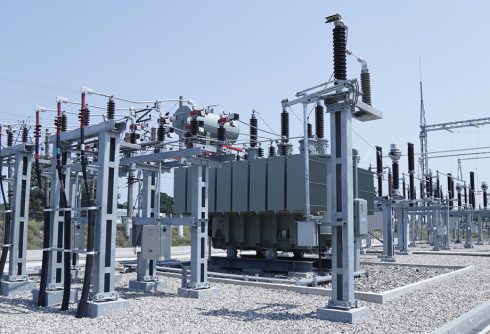
These agreements are commercial and technical at the same time. A utility-connected campus depends on large power transformers, substation transformers, metering and protection equipment, step-down transformers, medium-voltage distribution, spare transformer planning, and contingency procedures. The earlier those requirements are defined, the easier it is to align transformer procurement with civil work, utility milestones, and building energization.
Onsite Generation for Bridge Power and Long-Term Resilience
Onsite power for data centers is moving from a backup-only discussion to a time-to-power and resilience strategy. Fuel cells, reciprocating engines, gas turbines, modular power islands, and combined heat and power can help bridge utility delays or support long-term operational goals where site conditions allow.
However, onsite generation is not a plug-in alternative to the grid. Industry discussions increasingly note that the bottleneck is often not the generation unit itself, but transformers, gas interconnections, medium-voltage gear, protection studies, controls, permitting, and commissioning.
Onsite power generation still requires transformer infrastructure to step voltage up or down, interconnect generators to campus distribution, isolate systems, manage grounding and fault current, coordinate with utility service, and support islanded, grid-parallel, or transfer operation. For operators considering bridge power, the transformer and medium-voltage plan should be developed at the same time as the generation plan.
Battery Energy Storage and UPS Evolution
Battery energy storage can support ride-through, peak shaving, demand response, renewable smoothing, microgrid operation, backup transitions, and grid services where market rules allow. It can also help campuses manage short-duration volatility as loads ramp or as renewable output changes.
BESS should be treated as a complement to UPS and generator strategies, not a universal replacement for long-duration backup. Its value depends on duration, control logic, utility rules, safety requirements, operating mode, and the rest of the campus power architecture.
Storage also changes electrical design. Bidirectional power flows, harmonics, short-circuit behavior, protection settings, thermal loading, and monitoring requirements can affect transformer specification. These factors should be modeled before major equipment is released for manufacture.
Renewable Energy, PPAs, and 24/7 Carbon-Free Matching
Data center operators are using solar and wind PPAs, utility green tariffs, renewable energy credits, solar-plus-storage, and clean energy procurement matched by region or hour. These tools can help support sustainability goals, but they do not eliminate the need for reliable grid and substation planning.
Renewable integration can increase the need for voltage regulation, monitoring, protection coordination, and transformer designs that can handle changing operating profiles. Grid-enhancing technologies, cleaner repowering of existing energy sites, and better use of transmission infrastructure may also help utilities and large-load customers bring more capacity online.
For transformer planning, the key point is that renewable-backed power still enters through a physical grid or onsite interconnection. The electrical system must be designed for reliability, fault management, maintenance access, and future load growth.
Nuclear, SMRs, Geothermal, and Firm Clean Power
Hyperscalers, utilities, and power producers are evaluating firm clean energy sources for long-term baseload support. Options include existing nuclear power, small modular reactors, enhanced geothermal, hydropower where available, and gas generation with carbon capture in some scenarios.
These resources are generally longer-term strategies, while natural gas generation remains a common bridge option today. Even so, they matter for planning because large campuses may be designed now and expanded over many years.
Future firm power still requires substations, transformers, switchgear, interconnection equipment, protection and controls, monitoring, and staged energization plans. A campus that leaves physical room, electrical capacity, and control-system flexibility for future resources will be better positioned than one designed around a single pathway.
What Diversification Means for Transformer and Substation Design
Power diversification increases the importance of the medium-voltage and substation layer. More sources, more operating modes, and more expansion phases mean transformer and substation decisions become strategic project decisions, not late-stage procurement tasks.
More Power Sources Mean More Complex One-Line Diagrams
A diversified power strategy may combine utility service, onsite generation, BESS, UPS, renewable procurement, and future firm supply. That can introduce multiple interconnection points, parallel power paths, transfer schemes, protection zones, islanding considerations, and utility coordination requirements.
The one-line diagram should show more than equipment. It should show how the facility will operate during normal service, grid disturbance, generator transfer, maintenance, partial outage, expansion, and restoration. Each mode can affect transformer loading, protection settings, grounding, fault current, and control sequencing.
Medium-Voltage Architecture Becomes a Strategic Decision
Medium-voltage planning is now central to data center power infrastructure. Campuses may evaluate 34.5 kV and 13.8 kV distribution, 480 V step-down systems, modular substations, campus loops, high-voltage busways, DC-ready concepts, and phased energization.
The right architecture depends on utility voltage, load density, distance between buildings, redundancy class, fault duty, site layout, construction phasing, and maintenance access. A design that works for the first building may not be sufficient for a campus that scales into hundreds of megawatts.
Industry sentiment also suggests growing interest in high-voltage central busways and direct-current distribution architectures. These concepts may not fit every project, but they reinforce a broader point: voltage strategy is now part of competitive data center planning.
Transformer Specification Must Account for AI-Era Loads
AI-era loads can be dense, dynamic, and power-electronics heavy. High rack densities, fast load ramps, cooling systems, variable-speed drives, inverters, and UPS equipment can create harmonic considerations, reactive power needs, thermal loading, transient behavior, and protection challenges.
Transformer specifications should address efficiency, thermal performance, redundancy, short-circuit duty, grounding, cooling medium, monitoring, noise, physical footprint, maintainability, and compliance requirements. For larger liquid-filled units, dissolved gas analysis, oil testing, bushing monitoring, and partial discharge monitoring where applicable may support predictive maintenance.
This is where standards-led engineering matters. Load-flow studies, short-circuit studies, grounding analysis, harmonic studies, protection coordination, and reliability planning should guide transformer and system design before major equipment is ordered.
Lead Times Are Now Part of Power Strategy
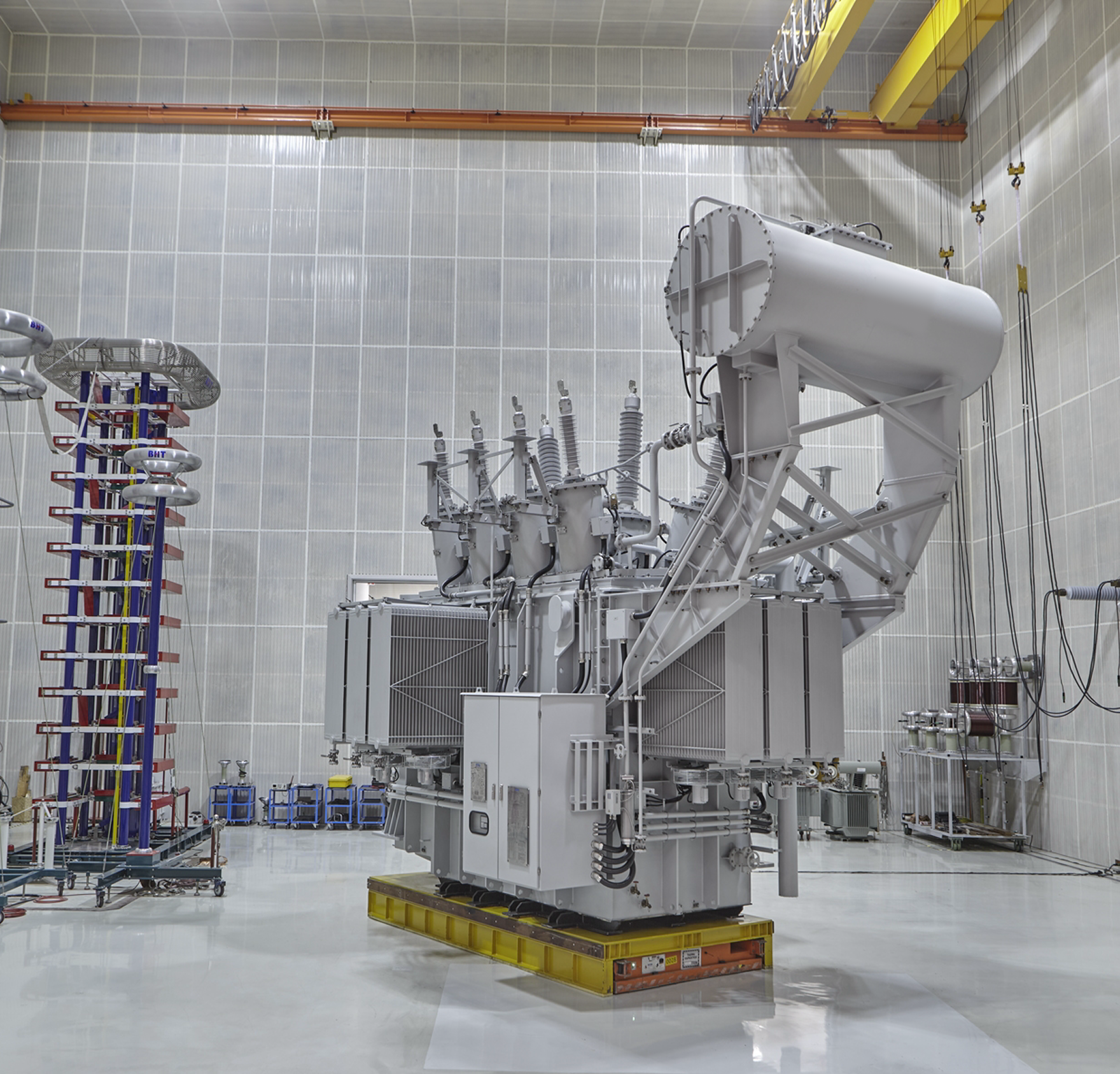
A diversified power plan can still fail if transformer procurement is not aligned early. Transformer lead times, factory acceptance testing, documentation review, shipping, customs, rigging, foundations, oil filling, and commissioning all affect energization.
Data center teams should identify long-lead units early, standardize specifications where possible, consider spares or mobile transformer contingency plans, align factory testing with energization milestones, and coordinate logistics before construction reaches the point of dependency.
The practical lesson is simple: time-to-power is not only about generation availability or utility approval. It is also about whether the right transformer equipment can be manufactured, tested, delivered, installed, and commissioned when the project needs it.
Best Practices for Building a Diversified Data Center Power Strategy
1. Start with Power Availability Alongside Land Acquisition
Evaluate available withdrawal capacity from nearby substations, transmission constraints, generation proximity, interconnection queues, gas infrastructure, environmental constraints, and utility planning data during site selection. Power intelligence should sit beside land, fiber, tax, labor, and permitting analysis.
2. Model Multiple Energization Paths
Compare grid-only service, utility-led power solutions, temporary or bridge power, permanent onsite generation, renewables-plus-storage, hybrid microgrids, PPA-backed grid supply, and future clean-firm options. Identify the first reliable megawatt, the next expansion block, and the long-term target state.
3. Design for Staged Expansion
AI campuses may scale in large increments. Plan for phased capacity additions to avoid unnecessary rework on transformers, switchgear, substations, cable routes, foundations, controls, and protection systems.
4. Treat Transformers as Critical-Path Assets
Specify early, standardize when possible, and identify long-lead units. Evaluate whether spares, modular units, or phased transformer deployment can reduce schedule risk.
5. Coordinate Protection, Grounding, Harmonics, and Controls
Diversified sources add operational complexity. Engineering studies should be completed before major equipment is released for manufacture, especially where onsite generation, storage, UPS systems, and utility feeds interact.
6. Build Utility Relationships Early
Successful projects increasingly involve early co-planning among data center operators, utilities, independent power producers, EPCs, and equipment partners. Utility requirements can shape voltage, protection, telemetry, switching, and commissioning procedures.
7. Plan for Future Architectures
Include physical space, voltage strategy, monitoring, protection, and controls flexibility for DC distribution, high-voltage busways, BESS, microgrids, future SMR or geothermal integration, additional substations, and future transformer banks.
Real-World Signals in the Market
The market is already moving toward more diversified data center power solutions.
AEP and Bloom Energy have announced solid oxide fuel cell systems intended to help meet immediate data center power needs while longer-term grid investments continue. This is an example of utility-led onsite power responding to time-to-power constraints.
Data Center Frontier’s 2025 Trends Summit recap described a market where utilities, independent power producers, and data center operators are increasingly co-planning around grid service, bridge power, onsite generation, modular power islands, microgrids, and future resources such as SMRs and geothermal.
Power-driven market selection is also becoming more visible. Industry sources are emphasizing substation capacity, interconnection data, power availability, generation proximity, and utility planning as key site-selection inputs.
Repowering existing energy infrastructure may also play a role. Clean repowering of retired coal and gas sites, grid-enhancing technologies, advanced power flow controls, dynamic line ratings, and topology optimization can help utilities use existing grid assets more effectively while serving larger loads.
How Northfield Supports Diversified Data Center Power
Power diversification only works when electrical infrastructure can keep pace. Northfield Transformers supports data center, utility, EPC, and renewable developer projects with transformer sourcing, specification support, testing coordination, documentation, logistics, and expedited delivery where applicable.
Northfield can support grid interconnection transformers, onsite generation transformers, renewable integration transformers, medium-voltage campus distribution, step-up and step-down applications, replacement units, and contingency planning. For data centers becoming power campuses, the right transformer strategy helps every power pathway remain reliable, protected, and ready for expansion.
The Future Data Center Is Power-Diverse by Design
Data centers are not simply adding more backup power. They are becoming power campuses that combine utility service, onsite generation, storage, renewables, and future firm clean resources. In that environment, the need to step, monitor, protect and integrate safely with other sources make transformers more important. As a result, operators who seek to bring additional capacity online must plan early to overcome long transformer lead times and secure their position for crucial power infrastructure.
Planning a data center expansion, onsite power project, or utility interconnection? Northfield Transformers can help you source, specify, test, and deliver transformer equipment for complex data center power architectures. Contact our team to discuss your project timeline and technical requirements.
Frequently Asked Questions (FAQ)
What are data center power solutions?
Data center power solutions are the systems, equipment, agreements, and operating strategies used to deliver reliable electricity to data centers. They can include utility service, substations, transformers, switchgear, UPS systems, generators, battery storage, onsite generation, renewable PPAs, microgrids, and monitoring systems.
Why are data centers diversifying their power strategies?
Data centers are diversifying power strategies because AI growth, grid constraints, transmission timelines, and interconnection delays can make grid-only planning risky. A diversified strategy can improve time-to-power, resilience, sustainability alignment, and expansion flexibility.
Does onsite power replace the utility grid for data centers?
Usually, no. Data center campuses use onsite power as a bridge tool, resilience layer, or supplement to utility service. Most campuses still need utility interconnection, metering, protection coordination, transformers, and medium-voltage distribution.
What role do transformers play in data center power infrastructure?
Transformers step voltage up or down, connect utility and onsite generation sources, support medium-voltage distribution, isolate systems, manage fault current, and help integrate storage, renewables, and backup systems into the campus electrical architecture.
How does battery energy storage support data centers?
Battery energy storage can support ride-through, peak shaving, demand response, renewable smoothing, backup transitions, microgrid operation, and grid services where allowed. Rather than replacing every form of backup power, data center developers install BESS alongside UPS and generator systems.
What should data center teams consider before selecting a site?
Teams should evaluate substation capacity, available utility voltage, transmission constraints, interconnection queue position, nearby generation, gas infrastructure, environmental requirements, permitting conditions, fiber access, and transformer delivery timelines.
Why should transformer procurement begin early in data center planning?
Transformer procurement should begin early because long lead times on power equipment is a known bottleneck for energy projects. Transformer specifications, factory testing, documentation, logistics, foundations, oil filling, installation, and commissioning all need to align with energization milestones.
How can Northfield Transformers support diversified data center power projects?
Northfield Transformers can support grid interconnection, onsite generation transformers, renewable energy transformers, step-up and step-down applications, medium-voltage campus distribution, with sourcing, testing coordination, documentation, logistics, and expedited delivery where applicable.